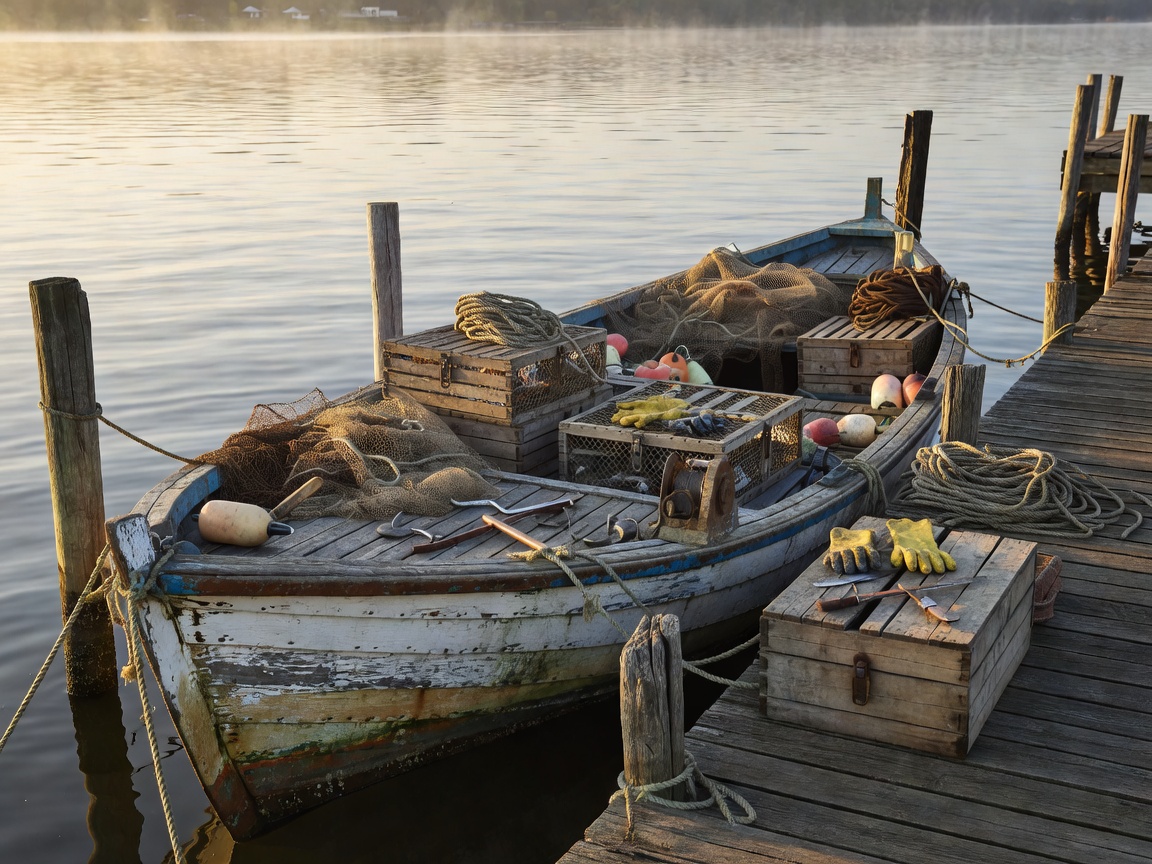
Fishing life is a chain of tasks, not a single scene at the water. It can include preparation, travel, catch handling, maintenance, storage and sale. The mix differs by fishery, coast, vessel and community.
A livelihood shaped by place
Access to fishing grounds, harbor shelter, weather and transport all affect how work is organized. Island settlements may depend on water routes for connections beyond the village. Fjord and open-coast settings present different conditions. Local practices develop in response to species, equipment, regulation and markets. Avoid treating one boat, net or building as representative of the entire region.
Fishing can exist alongside other work. Households and coastal economies may combine maritime employment with services, processing, transport or other livelihoods. The role of fishing changes over time. A harbor can remain important even when the mix of activity has shifted.
Boats and practical skill
Vessels are tools shaped by purpose and operating conditions. Size, hull form, engine, equipment and deck arrangement all affect how a boat can be used. Smaller craft may support nearshore work or local movement; larger vessels can serve different operations. These broad categories are not a complete account of vessel types.
Maritime skills extend beyond handling a boat. They can include reading conditions, maintaining gear, securing moorings, repairing equipment and working safely around water. Such knowledge is learned through practice and passed between people and generations. It should not be reduced to a picturesque detail for visitors.
When observing a vessel, keep off the deck and equipment unless invited. Do not handle ropes or gear. Ask permission before photographing identifiable workers, private boats or work in progress.
Seasonal work and changing conditions
Fishing schedules can follow biological, regulatory and weather conditions. The timing and pattern vary by fishery and location. Seasonal work can influence harbor activity, maintenance, processing and household routines. A visitor should not assume a predictable schedule from a general travel calendar.
Weather can disrupt plans and affect safety. Wind, visibility, swell, ice and rapid changes can influence whether work or transport proceeds. Local authorities and service providers publish current conditions where relevant. Check official information before travel and do not use this guide as an operational forecast.
Fish handling and food traditions
Fish may be landed, sorted, chilled, processed or transported through several stages. The facilities and methods depend on scale, regulation and the type of catch. Some handling happens out of public view. Working areas may have hygiene rules, safety limits or restricted access. Never enter a processing site without explicit permission.
Coastal food traditions reflect available fish, preservation methods, trade and household practice. Curing, drying, salting, smoking and fresh preparation appear in various forms across northern coastal cultures. No single dish or method belongs to every village. Ask local food providers about ingredients and preparation, and follow current food-safety information.
Community life around the harbor
A harbor can be a workplace, transport link, meeting point and part of a settlement’s public identity. Its social role does not make every section public. Residents may live next to active operations. Visitors should keep voices and equipment under control, avoid blocking access and respect signs, fences and private property.
Local knowledge is practical. It can cover safe routes, changing conditions and the meaning of a working space. Do not expect residents to provide a tour or explain private work. Support local services only where they are open and available, and verify details directly with providers.
Modern coastal economies
Fishing communities face changes in markets, technology, regulation, labor, infrastructure and population patterns. Some work is mechanized; other tasks remain highly skilled and labor-intensive. Processing may take place locally or elsewhere. New uses for waterfront buildings can help sustain them, but can also compete with access and working functions.
There is no single direction of change. Each place has its own conditions and decisions. A respectful account recognizes fishing as contemporary work as well as heritage. It avoids describing communities as frozen in the past.
Field notes: observe without interrupting
- Notice where boats, storage and access routes connect.
- Keep clear of working vessels, lines, vehicles and landing activity.
- Ask before taking close photographs of people or private equipment.
- Follow hygiene, safety and access signs around work areas.
- Use current official sources for seasonal restrictions and conditions.
Good for
Readers exploring living heritage, maritime labor, boat use, coastal food and the links between work and settlement.
What to know
Fishing activity is variable. A quiet harbor does not indicate that a community has no fishing heritage, and visible activity does not imply visitor access. Schedules, access and services change. Check directly with relevant official providers.
Benefits and limits of a working harbor
What it connects
- Skills, boats, shoreline access and local knowledge.
- Food traditions and supply chains.
- Working heritage that continues to evolve.
What visitors must respect
- Safety, privacy and operational boundaries.
- Variable work schedules and changing conditions.
- Local practices that cannot be generalized.
Observe from a permitted public place. Never interrupt a landing, repair or loading task for a photograph.
Related guides
Next guide / Field preparation